If you have ever fallen in love with Sicily through a plate of pasta, a Baroque façade glowing at sunset, or the salty breeze off the Mediterranean, chances are you have already met Inspector Salvo Montalbano, even if you do not know his name yet. For more than twenty-five years, this sharp-tongued, food-obsessed Sicilian detective has been the most charming ambassador of Italian culture the world has seen. Born on the page, brought to life on screen, and rooted in the real landscapes of southern Sicily, Montalbano is far more than a crime-solver. He is a window onto a way of life.
Who is Inspector Montalbano? The character and his creator
Salvo Montalbano is the chief of police in the fictional Sicilian town of Vigàta, in the equally fictional province of Montelusa. He is brilliant, irascible, deeply moral, and permanently torn between his love of justice and his love of a good meal. He swims every morning in the sea in front of his house in Marinella, argues with his long-suffering girlfriend Livia (who lives in Genoa), and relies on a colourful team that includes the womanising Mimì Augello, the solid and loyal Fazio, and the hilariously mangled-speaking Catarella.
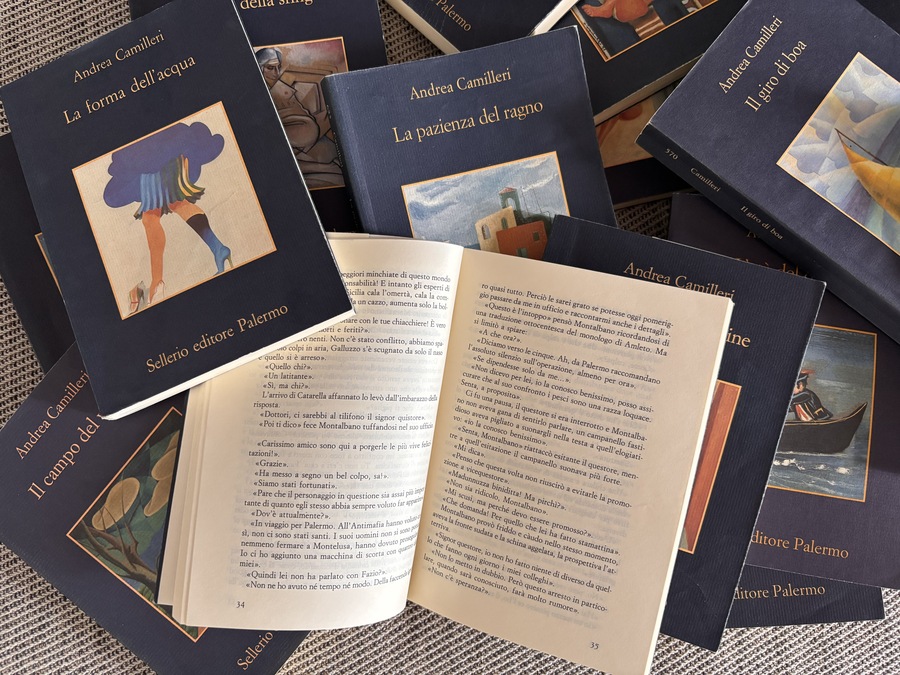
His creator, Andrea Camilleri (1925–2019), was a Sicilian from Porto Empedocle, near Agrigento. He began writing the Montalbano novels relatively late in life, his first, La forma dell’acqua (The Shape of Water), appeared in 1994 when he was nearly seventy. Camilleri mixed standard Italian with Sicilian dialect and invented a language that feels both literary and spoken. He used the detective genre as a vehicle to talk about corruption, immigration, the Mafia, bureaucracy, and the slow erosion of the old Sicily he loved. The result was an instant and enduring success.
The Inspector Montalbano books: where to start
There are 28 novels in the series, plus several collections of short stories. The final novel, Riccardino, was published posthumously in 2020. The books are best read in order of publication because the characters age, relationships evolve, and Sicily itself changes around them.
Start with the first four:
- The Shape of Water
- The Terra-Cotta Dog
- The Snack Thief
- The Voice of the Violin
English readers are lucky: the translations by Stephen Sartarelli capture both the humour and the musicality of Camilleri’s hybrid language.
I have read every single one of Camilleri’s books. We share the same roots, Sicilian soil, the same ironies, the same stubborn love of this complicated island and every page feels like coming home.
The Inspector Montalbano TV show: cast, episodes, and seasons
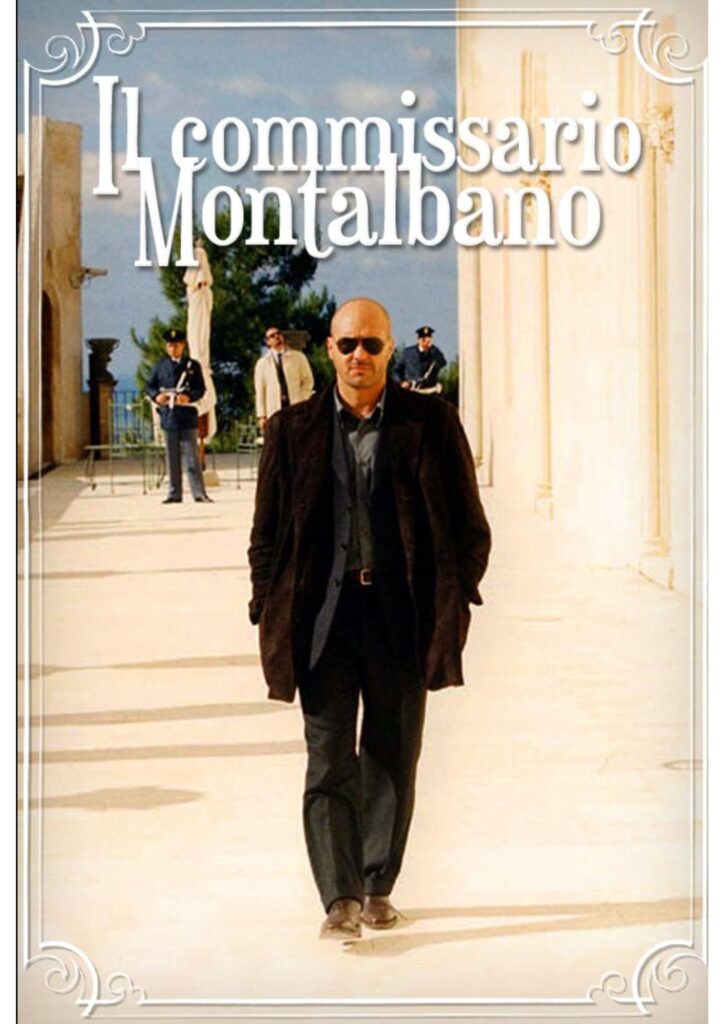
The television adaptation, Il Commissario Montalbano, began in 1999 and concluded in 2021. It consists of 15 seasons and 37 feature-length episodes (each roughly 100 minutes). Produced by RAI and Palomar, the series quickly became one of the most watched programmes in Italian television history, regularly drawing audiences of more than 10 million viewers. It has been broadcast in dozens of countries and remains a gateway to Italian language and culture for foreign audiences.
The episodes are largely faithful to the novels (sometimes combining stories) and retain Camilleri’s mix of crime, comedy, social commentary, and gastronomy. Watching them is the next best thing to sitting on a terrace in Sicily with a glass of wine and a plate of pasta alla norma.
The cast of Inspector Montalbano
The series is inseparable from its perfect casting:
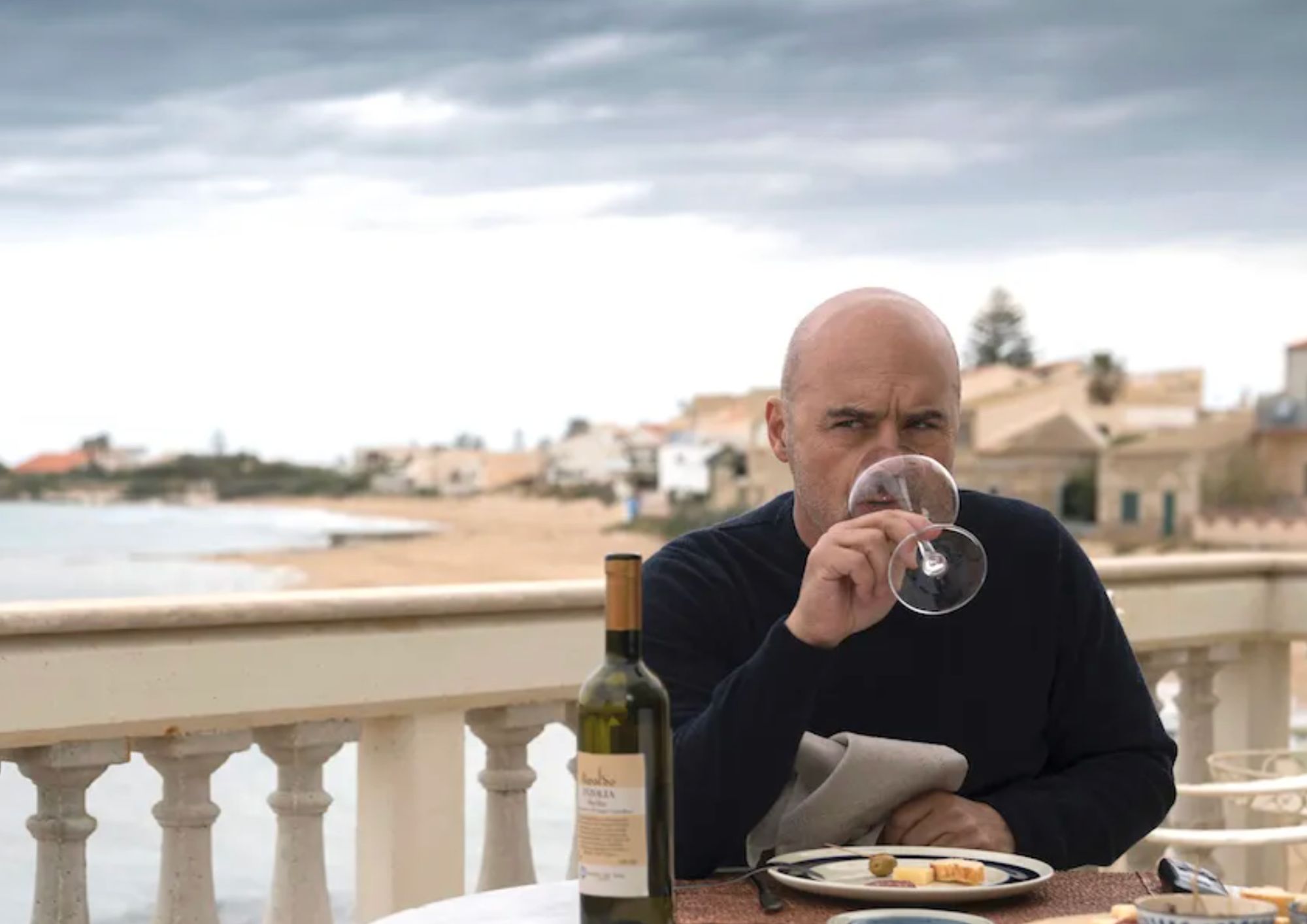
- Luca Zingaretti as Salvo Montalbano – the face and soul of the character for more than twenty years.
- Cesare Bocci as Domenico “Mimì” Augello – the charming, womanising deputy.
- Peppino Mazzotta as Giuseppe Fazio – quiet, reliable, the perfect foil.
- Angelo Russo as Agatino Catarella – the comic genius whose mangled Italian (“Dottore, dottore, mi scusasse!!!”) became a national catchphrase.
- Supporting regulars include Davide Lo Verde (Galluzzo), Roberto Nobile (the journalist Nicolò Zito), and, over the years, several actresses who played Livia and the pathologist Dr. Pasquano’s colleagues.
The ensemble feels like a real police station family, and their chemistry is one of the main reasons the series remains so rewatchable.
Montalbano and Sicily: the real locations of the show
Camilleri set his stories in a lightly fictionalised version of the province of Agrigento (Vigàta is based on Porto Empedocle). The television series, however, moved eastward and filmed almost everything in the province of Ragusa, one of the most beautiful Baroque areas of Sicily, part of the UNESCO Val di Noto.
Key locations you can still visit today:
- Punta Secca (Santa Croce Camerina) – Montalbano’s seaside house in “Marinella.” The terrace, the lighthouse, the beach, everything is real and now a tourist pilgrimage site.
- Scicli – the town hall on Via Mormino Penna stands in for the Vigàta police station. The Baroque street is one of the most elegant in Sicily.
- Ragusa Ibla – the stunning historic centre often appears as Vigàta’s streets and squares.
- Modica – another jewel of the Val di Noto, frequently used for exterior shots.
- Other spots include Ispica, Sampieri, and the surrounding countryside.
Walking these towns after watching the series is a peculiar pleasure: you keep expecting Catarella to appear around the next corner.
Why Inspector Montalbano became a global phenomenon
Montalbano succeeded because he is deeply local and universally human. He is a man who refuses to be hurried, who believes a proper lunch is a moral necessity, who rages against injustice and bureaucracy with equal passion, and who loves his island even when it exasperates him. In an age of globalised crime fiction, he offered something rarer: a strong sense of place, a distinctive voice, and a Sicily that is neither postcard nor stereotype.
The books sold millions of copies in Italy and abroad. The television series turned the Ragusa area into a major tourist destination and introduced countless foreigners to the rhythms of Sicilian life, the beauty of its landscapes, and the pleasure of slowing down. Camilleri proved that you can write about corruption, migration, and social change without ever losing your sense of humour or your appetite.
Inspector Montalbano – FAQ
Here are the answers to the questions readers most often ask about the books, the television series, and the Sicilian world of Inspector Montalbano.
What is Andrea Camilleri’s most famous quote?
There is no single universally famous quote, but one of the most loved is:
“The real difference between one person and another lies in their minds, in their thoughts, not in their badges, their flags, or their uniforms.”
How many Inspector Montalbano books are there?
There are 28 novels in the main series, plus short-story collections. The last novel is Riccardino (2020).
In what order should I read the Montalbano books?
Strict publication order, beginning with The Shape of Water (1994). The characters and the island evolve over time.
Are the Montalbano books popular in Italy?
Extremely. They are among the best-selling Italian books of the last thirty years and made Camilleri a national institution.
Where does Montalbano live in Sicily?
In the novels he lives in Marinella, a coastal village near the fictional Vigàta (based on the Agrigento area). On television, his house is the real house in Punta Secca, province of Ragusa.
How many seasons of Inspector Montalbano are there?
15 seasons, for a total of 37 episodes, broadcast between 1999 and 2021.
Where is Inspector Montalbano filmed?
Primarily in the province of Ragusa in south-eastern Sicily: Punta Secca, Scicli, Ragusa Ibla, Modica, and surrounding locations.