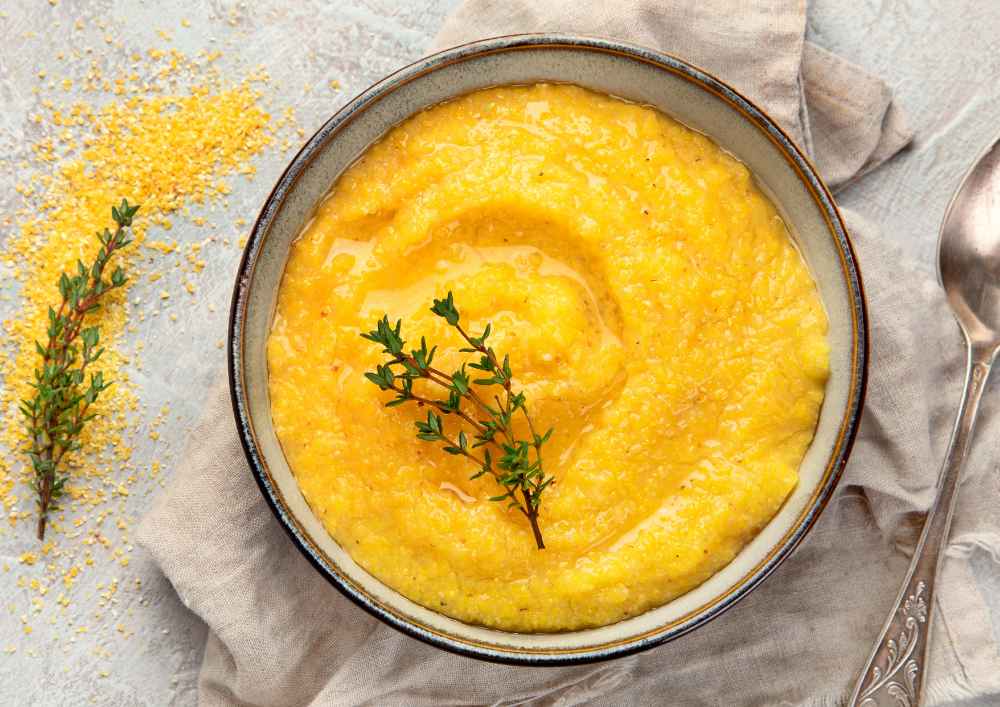
Imagine a cold winter evening in the Alps. Snow outside, a fire inside, and a big pot of golden polenta bubbling on the stove. Now imagine stirring in melted butter and generous handfuls of local cheese until it becomes soft, creamy and stretchy. That is polenta concia, one of the most comforting dishes in Italian mountain cooking.
In this article you will learn where polenta concia comes from, what you need to make it, how to cook it step by step, and how to avoid the most common mistakes. You will also find other tasty ways to enjoy polenta in Italy, and answers to the questions people ask most often.
What is polenta concia? Origins and history
Polenta concia is a dish from the mountain regions of northern Italy, especially Piedmont and the Aosta Valley. The word concia comes from the Italian verb condire, which means “to season” or “to dress”. So the name simply means “dressed polenta”: polenta made rich with butter and cheese.
Polenta itself is very old. Long before corn arrived in Europe, Italians cooked porridges made from grains like spelt, millet and chestnut flour. After corn came from the Americas in the 1500s, it grew well in the cool, damp valleys of the north and slowly became the main food of poor country families. For centuries, plain polenta was eaten almost every day, often with very little on top.
Polenta concia was the festive version. Mountain families made cheese and butter from the milk of their cows, so adding them to polenta turned a simple meal into a feast. Today it is still served in mountain huts, family kitchens and village festivals, and many people see it as the taste of home.
Polenta concia ingredients: what you need for an authentic recipe
The list is short, so the quality of each ingredient really matters. For four people you will need:
- 250 g (about 1 1/4 cups) coarse yellow cornmeal for polenta
- 1 litre (4 cups) water
- 1 teaspoon coarse salt, or to taste
- 200 g (7 oz) semi-soft mountain cheese, such as Fontina, Toma or Bettelmatt, cut into small cubes
- 80 g (about 6 tablespoons) good butter
- 50 g (1/2 cup) grated Parmigiano Reggiano or Grana Padano, optional
Choose stone-ground cornmeal if you can. It has more flavor and a nicer texture than the very fine kind. Avoid pre-grated cheese: it does not melt well and can make the polenta grainy.
How to make polenta concia: step-by-step recipe
Bring the water to a boil in a large, heavy pot and add the salt. Lower the heat to medium and pour in the cornmeal slowly, like a thin rain, while whisking all the time. This stops lumps from forming.
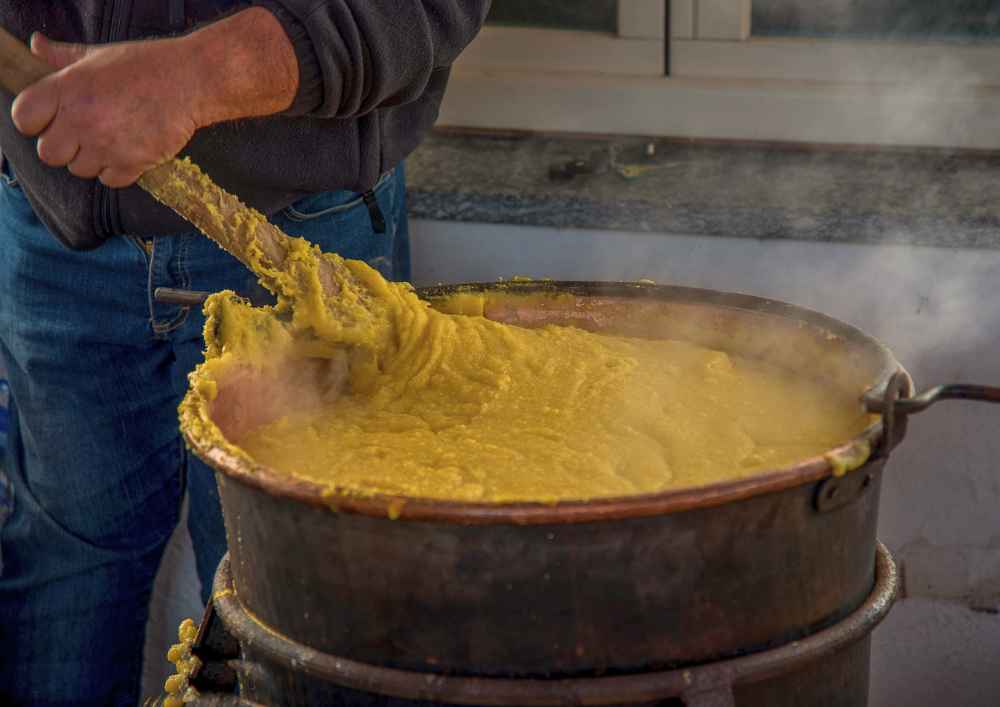
Once all the cornmeal is in, switch to a wooden spoon. Turn the heat down to low and cook for about 45 to 50 minutes, stirring often so the polenta does not stick to the bottom. It is ready when it comes away from the sides of the pot and feels thick and smooth. If it gets too thick, add a splash of hot water. If you use quick-cooking cornmeal, follow the package times, usually about 10 minutes.
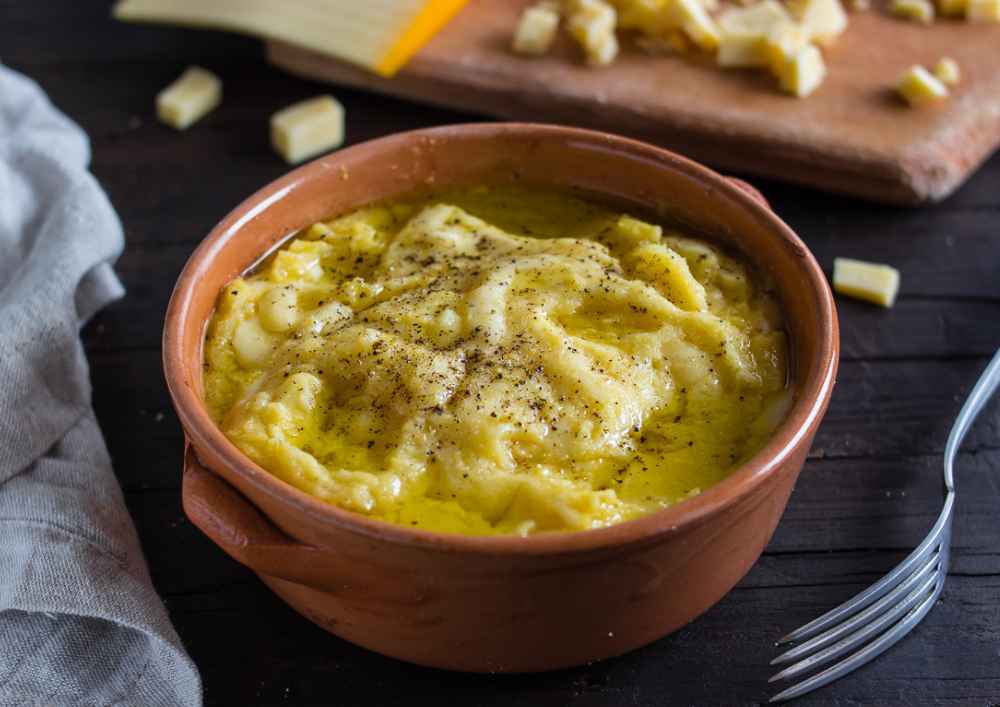
Now comes the best part. Turn off the heat, add the butter and the cheese cubes, and stir until everything melts into a creamy, stringy mass. Add the Parmigiano if you like. Taste, adjust the salt, and serve right away in warm bowls. For an extra-special touch, melt a little more butter until it is golden and pour it over the top.
Polenta dishes: other ways to enjoy polenta in Italy
Polenta concia is only one of many polenta dishes. In Italy, polenta can be soft and creamy, or firm and sliceable, and it goes with almost everything.
Soft polenta is often served with rich stews, such as beef braised in red wine, wild boar, rabbit, or sausages in tomato sauce. In the Veneto region, it is paired with creamy salt cod (baccalà), and in Lombardy you will find it with mushrooms and cassoeula, a hearty pork and cabbage stew.
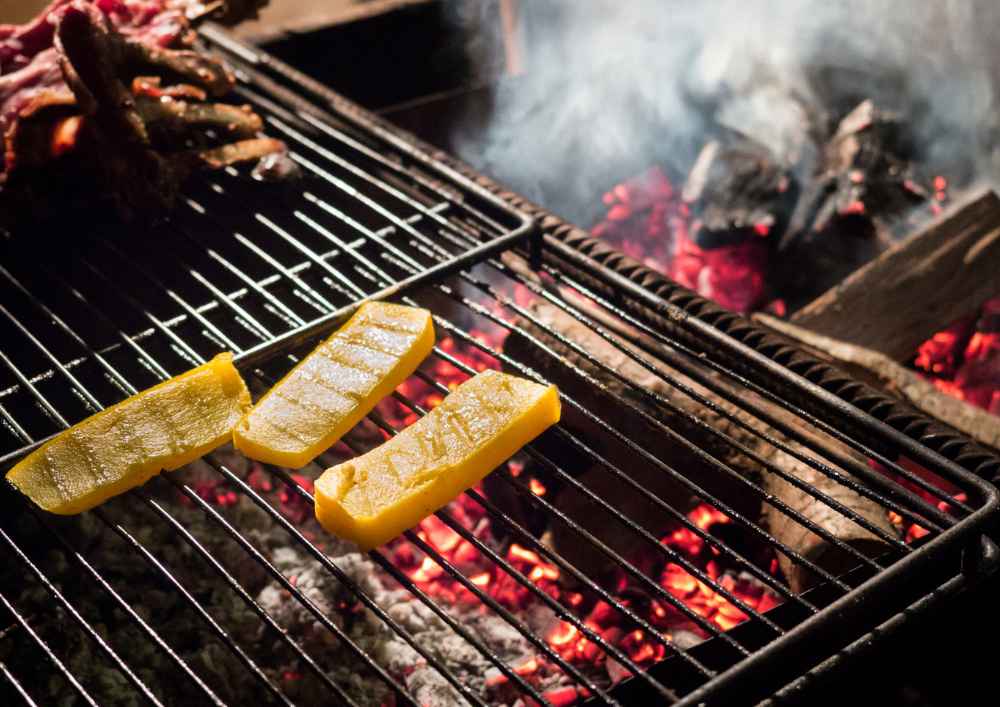
Polenta on the grill is my favorite way to eat polenta. Let the cooked polenta cool and set in a tray, then cut it into thick slices. Pour a little olive oil on a very hot griddle and cook the slices for a few minutes on each side. The outside becomes golden and lightly crisp, while the inside stays soft. Serve it with grilled sausages or vegetables, or top it with some cheese, especially Gorgonzola, which melts on the hot polenta and gives it a rich, creamy flavor.
Crispy fried polenta is another great snack. Cut cold, firm polenta into sticks or squares and fry them in hot oil until golden and crunchy. Sprinkle with salt and serve them like fries, with a dip, or as a side dish. Leftover polenta is perfect for this, so nothing goes to waste.
Common mistakes to avoid when making polenta concia
The first mistake is adding the cornmeal too fast. If you dump it in all at once, you will get lumps. Pour it slowly and keep whisking.
The second is not stirring enough. Polenta sticks easily, and a burnt layer on the bottom can spoil the taste. Use a heavy pot and stir regularly.
The third is using the wrong cheese. Very hard or very dry cheeses do not melt into that creamy, stretchy texture. Pick a soft or semi-soft mountain cheese and add a little hard cheese only for extra flavor.
The fourth is adding the cheese while the pot is still on high heat. It can turn oily or stringy in the wrong way. Take the pot off the heat first, then stir in the butter and cheese.
Finally, do not wait too long to serve it. Polenta concia is at its best hot and soft. As it cools, it becomes firm and loses its creamy charm.
Polenta concia: FAQ
Still have questions about making polenta concia? Here are quick answers to the ones people ask most often, from the best cheese to use to making it ahead of time.
What is polenta concia made of?
Polenta concia is made of cornmeal, water, salt, butter and mountain cheese, usually Fontina or Toma.
Is polenta concia the same as polenta taragna?
No. Polenta taragna is typical of Bergamo, Lecco and Valtellina, in Lombardy. Unlike most polentas, which use only cornmeal and are yellow, it is made with cornmeal and buckwheat flour, giving it a darker color and a nutty taste. The cheese is also added during cooking, while in polenta concia it is stirred in at the end.
Can I make polenta concia ahead of time?
Yes, but it is best fresh. You can cook the polenta up to a few hours ahead and keep it warm, then add the butter and cheese just before serving. You can also reheat leftovers in the oven with a little milk or water.
What cheese is best for polenta concia?
Fontina from the Aosta Valley is the classic choice because it melts beautifully. Toma, Bettelmatt, or a young Asiago also work well. Mix in a little Parmigiano for a stronger taste.
Is polenta gluten-free?
Yes, cornmeal is naturally gluten-free. If you have celiac disease, check the label to make sure the cornmeal was not processed near wheat, and always check that the other ingredients are safe too.