
If you want to speak Italian, you need verbs. They are the engine of every sentence: canto (I sing), parli (you speak), dormiamo (we sleep). The good news? Most Italian verbs follow clear patterns. Once you learn the pattern, you can use hundreds of verbs without memorizing each one.
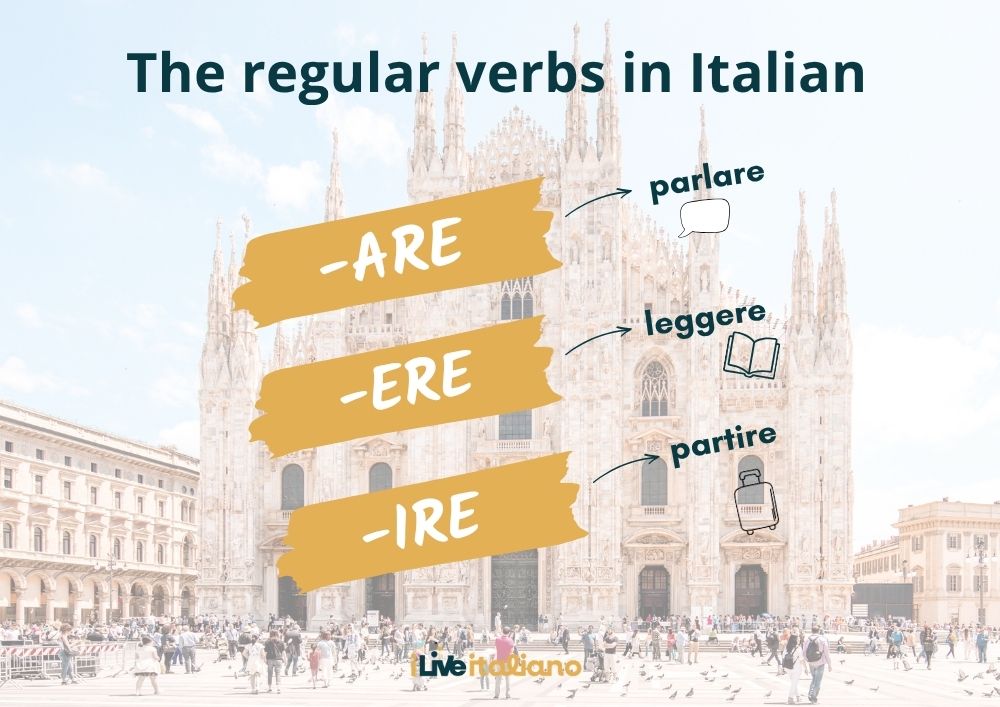
Italian regular verbs are split into three groups, based on how the verb ends in its basic form (the infinitive): -are, -ere and -ire. Each group has its own set of endings. To conjugate a verb, you take off the ending, keep the first part (called the stem), and add the new ending that matches the person speaking.
In this guide, we will look at each group step by step, compare them side by side, and finish with some exercises so you can practice. We will mostly focus on the present tense, because it is the best place to start, and then give you a quick look at three other useful tenses.
“are” verb conjugations in Italian
Verbs ending in -are are the biggest group in Italian. Most new verbs that enter the language are also -are verbs. Some common examples are parlare (to speak), abitare (to live), cantare (to sing) and lavorare (to work).
To conjugate an -are verb in the present tense, remove -are and add these endings: -o, -i, -a, -iamo, -ate, -ano.
Let’s try it with parlare. The stem is parl-.
| Person | Ending | Parlare |
| io (I) | -o | parlo |
| tu (you) | -i | parli |
| lui/lei (he/she) | -a | parla |
| noi (we) | -iamo | parliamo |
| voi (you all) | -ate | parlate |
| loro (they) | -ano | parlano |
Example: Io parlo italiano con i miei amici. (I speak Italian with my friends.)
A small tip: verbs ending in -iare, like mangiare, lose one “i” before the endings that start with “i”. So we say mangi (not mangii) and mangiamo (not mangiiamo).
“ere” verb conjugations in Italian
Verbs ending in -ere are the second group. Some common examples are prendere (to take), vendere (to sell), scrivere (to write), leggere (to read) and vivere (to live).
To conjugate an -ere verb in the present tense, remove -ere and add these endings: -o, -i, -e, -iamo, -ete, -ono.
Let’s try it with prendere. The stem is prend-.
| Person | Ending | Prendere |
| io | -o | prendo |
| tu | -i | prendi |
| lui/lei | -e | prende |
| noi | -iamo | prendiamo |
| voi | -ete | prendete |
| loro | -ono | prendono |
Example: Noi prendiamo un caffè al bar ogni mattina. (We have a coffee at the café every morning.)
You will notice that -ere verbs look very similar to -are verbs. Only a few endings change: the lui/lei form ends in -e (not -a), the voi form ends in -ete (not -ate), and the loro form ends in -ono (not -ano).
“ire” verb conjugations in Italian
Verbs ending in -ire are the third and smallest group. Some common examples are dormire (to sleep), partire (to leave), aprire (to open), sentire (to hear or feel) and finire (to finish).
The -ire group has two types of verbs, and this is the part that surprises many learners.
Type 1: Regular -ire verbs (like dormire). Remove -ire and add: -o, -i, -e, -iamo, -ite, -ono.
Type 2: -ire verbs with -isc- (like finire). These add -isc- between the stem and the ending, but only for io, tu, lui/lei and loro. The noi and voi forms stay the same as in the first type.
| Person | Dormire (type 1) | Finire (type 2) |
| io | dormo | finisco |
| tu | dormi | finisci |
| lui/lei | dorme | finisce |
| noi | dormiamo | finiamo |
| voi | dormite | finite |
| loro | dormono | finiscono |
Example: Il film finisce alle dieci. (The movie ends at ten.)
How do you know which verbs use -isc-? Sadly, there is no simple rule. The best way is to learn them as you meet them. Common ones with -isc- are capire (to understand), preferire (to prefer), pulire (to clean) and spedire (to send). Your dictionary will usually tell you.
“are, ere, ire”: side-by-side comparison
Now let’s put everything together. Seeing the three groups next to each other makes the patterns easy to spot.
| Person | -ARE: parlare | -ERE: prendere | -IRE: dormire | -IRE (-isc-): finire |
| io | parlo | prendo | dormo | finisco |
| tu | parli | prendi | dormi | finisci |
| lui/lei | parla | prende | dorme | finisce |
| noi | parliamo | prendiamo | dormiamo | finiamo |
| voi | parlate | prendete | dormite | finite |
| loro | parlano | prendono | dormono | finiscono |
Here is what to notice:
- The io form always ends in -o.
- The tu form always ends in -i.
- The noi form always ends in -iamo. This is the easiest one!
- The differences are mostly in lui/lei, voi and loro.
Once you learn these patterns, you can use them with many different regular verbs
Italian regular verbs: practice exercises
Ready to try? Write your answers on paper first, then check them at the bottom.
Exercise 1: Fill in the blanks with the present tense.
- Io ________ (mangiare) la pasta.
- Tu ________ (leggere) un libro.
- Noi ________ (dormire) otto ore.
- Loro ________ (parlare) italiano.
- Lei ________ (capire) la lezione.
- Voi ________ (vendere) la casa.
- Luca e Anna ______ (preferire) la musica italiana.
Exercise 2: Which group does each verb belong to? Write -are, -ere or -ire.
cantare, ridere, partire, scrivere, abitare, aprire
Answers
- Exercise 1: 1. mangio, 2. leggi, 3. dormiamo, 4. parlano, 5. capisce, 6. vendete, 7. preferiscono
- Exercise 2: cantare (-are), ridere (-ere), partire (-ire), scrivere (-ere), abitare (-are), aprire (-ire)
If you want more practice, try saying a few verbs out loud every day with all six forms. Speaking helps your memory much more than just reading.
Italian regular verb conjugations – FAQ
Italian regular verbs follow useful patterns, but beginners often have questions about the three groups and how to recognise them.
What are regular verbs in Italian?
Regular verbs are verbs that follow a fixed pattern. You keep the stem and add the standard endings for their group. Once you know the pattern, you can conjugate any regular verb of that group.
How many groups of regular verbs are there in Italian?
There are three groups, based on the ending of the infinitive: -are, -ere and -ire. The -ire group has two sub-types, one of which adds -isc- in some forms.
What is the difference between -are, -ere and -ire verbs in Italian?
The difference is in the endings. They belong to three different conjugation groups and use different endings in some forms. For example, in the present tense: parlare → parla, parlate, parlano; leggere → legge, leggete, leggono; dormire → dorme, dormite, dormono. Some -ire verbs, such as finire, also add -isc- in some forms.
Which Italian tenses should I learn first?
Start with the present tense (presente), because you use it all the time. Then learn the passato prossimo (for finished past actions), the imperfetto (for past habits and descriptions) and the futuro (for future plans).
How do I know if an Italian verb is regular or irregular?
Check a dictionary or a verb conjugation table. Verbs that do not follow the pattern are irregular, and some very common ones are among them, such as essere (to be), avere (to have), andare (to go), fare (to do) and venire (to come). A good habit is to learn these few irregular verbs early, since you will use them every day.