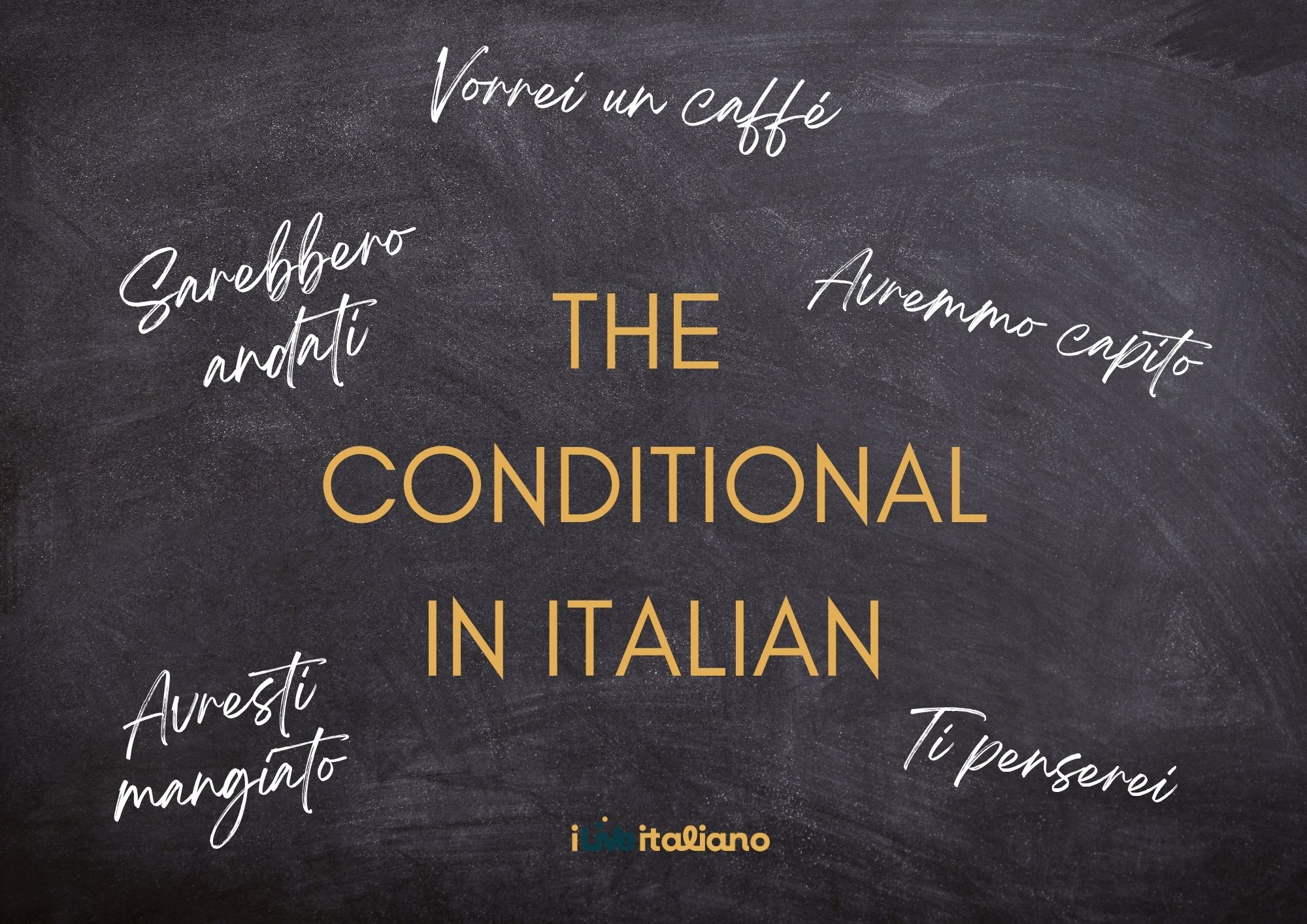
Italian conditional (il condizionale) is the mood Italians use to be polite, express wishes, describe hypothetical results, report unconfirmed news, and talk about a “future in the past.” It has two tenses: the present conditional (condizionale presente), which maps to English would + verb, and the past conditional (condizionale passato), which maps to would have + past participle. Learning it unlocks much of Italy’s social nuance: vorrei softens voglio, potrebbe turns a demand into a courteous request, and sarei felice di… makes you sound warm and considerate.
What is the conditional tense in Italian?
The Italian conditional is a verbal mood that marks potentiality rather than certainty. In practice:
- Condizionale presente: expresses what someone would do now or in the future (Mangerei meno zucchero = I would eat less sugar).
- Condizionale passato: expresses what someone would have done in the past (Avrei viaggiato di più = I would have traveled more). It often appears in if-clauses, polite requests, advice, reported speech, and cautious journalism.
When to use the conditional in Italian
Polite requests and softening statements
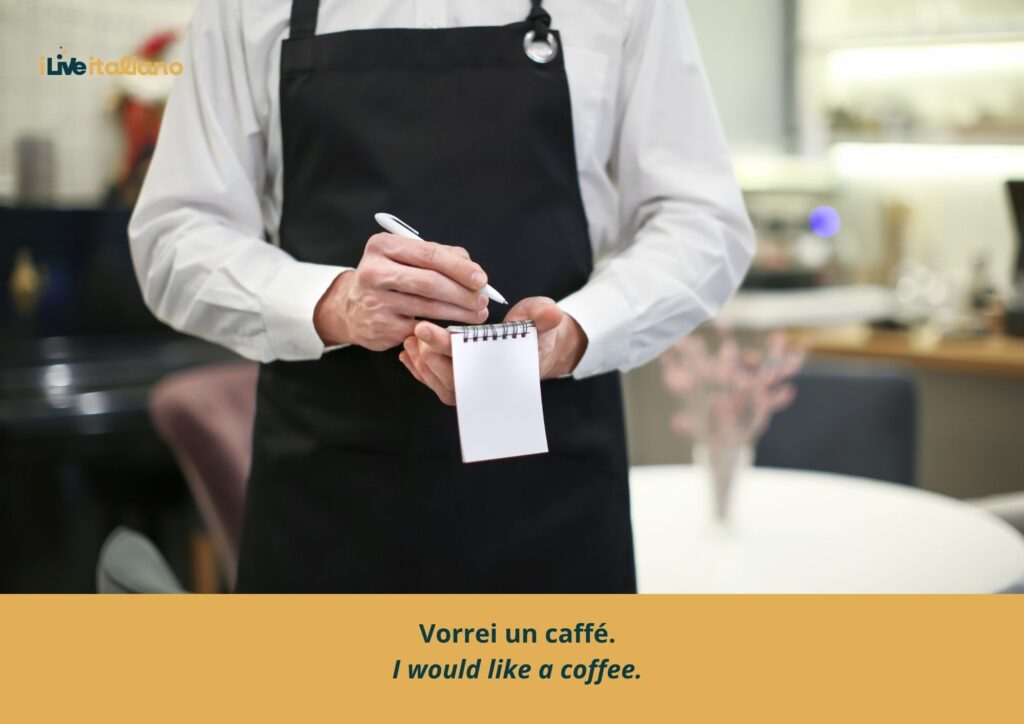
- Vorrei un caffè, per favore. = I would like a coffee, please.
- Potrebbe/potresti aiutarmi? = Could you help me?
- Direi che è una buona idea. = I’d say it’s a good idea.
Advice, necessity, possibility (with dovere, potere, volere)
- Dovresti studiare di più. = You should study more.
- Potremmo incontrarci domani. = We could meet tomorrow.
- Vorrei parlare con la direttrice. = I’d like to speak with the manager.
Hypotheticals (if-clauses)
- Se avessi tempo, viaggerei di più. = If I had time, I would travel more.
- Se avessi studiato, avrei passato l’esame. = If I had studied, I would have passed the exam. Pattern:
- Se + congiuntivo imperfetto → condizionale presente.
- Se + congiuntivo trapassato → condizionale passato.
Future in the past (reported plans/expectations)
- Ha detto che sarebbe arrivato alle otto. = He said he would arrive at eight.
- Reported but unconfirmed news (journalistic hedging)
- Il ministro si sarebbe dimesso. = The minister is said to have resigned.

Italian conditional tense conjugation: regular verbs
Form: For all three conjugations (-are, -ere, -ire), use the conditional stem + endings. For -are verbs, the theme vowel a changes to e (parlare → parler-). Endings are identical across conjugations.
Endings:
- io -ei
- tu -esti
- lui/lei -ebbe
- noi -emmo
- voi -este
- loro -ebbero
Models:
- Parlare → parlerei, parleresti, parlerebbe, parleremmo, parlereste, parlerebbero
- Credere → crederei, crederesti, crederebbe, crederemmo, credereste, crederebbero
- Dormire → dormirei, dormiresti, dormirebbe, dormiremmo, dormireste, dormirebbero
Orthography:
- -care/-gare add h to keep hard c/g: cercare → cercherei; pagare → pagherei.
- -ciare/-giare drop i: cominciare → comincerei; mangiare → mangerei.
Irregular conditional verbs in Italian
Many high-frequency verbs have irregular stems (endings stay regular):
- Essere → sarei, saresti, sarebbe, saremmo, sareste, sarebbero
- Avere → avrei, avresti, avrebbe, avremmo, avreste, avrebbero
- Andare → andrei, andresti, andrebbe, andremmo, andreste, andrebbero
- Dovere → dovrei, dovresti, dovrebbe, dovremmo, dovreste, dovrebbero
- Potere → potrei, potresti, potrebbe, potremmo, potreste, potrebbero
- Volere → vorrei, vorresti, vorrebbe, vorremmo, vorreste, vorrebbero
- Sapere → saprei, sapresti, saprebbe, sapremmo, sapreste, saprebbero
- Tenere → terrei, terresti, terrebbe, terremmo, terreste, terrebbero
- Venire → verrei, verresti, verrebbe, verremmo, verreste, verrebbero
- Rimanere → rimarrei, rimarresti, rimarrebbe, rimarremmo, rimarreste, rimarrebbero
- Bere → berrei, berresti, berrebbe, berremmo, berreste, berrebbero
- Dare → darei, daresti, darebbe, daremmo, dareste, darebbero
- Stare → starei, staresti, starebbe, staremmo, stareste, starebbero
- Fare → farei, faresti, farebbe, faremmo, fareste, farebbero
The conditional perfect in Italian (condizionale passato)
Form: present conditional of avere or essere + past participle.
- With avere: Avrei visto, avresti mangiato, avrebbe parlato, avremmo capito, avreste comprato, avrebbero lavorato.
- With essere: Sarei andato/a, saresti arrivato/a, sarebbe rimasto/a, saremmo partiti/e, sareste tornati/e, sarebbero diventati/e. Agreement rules: with essere, the participle agrees in gender and number (andato/andata/andati/andate).
Uses:
Unreal past/hypothetical outcomes
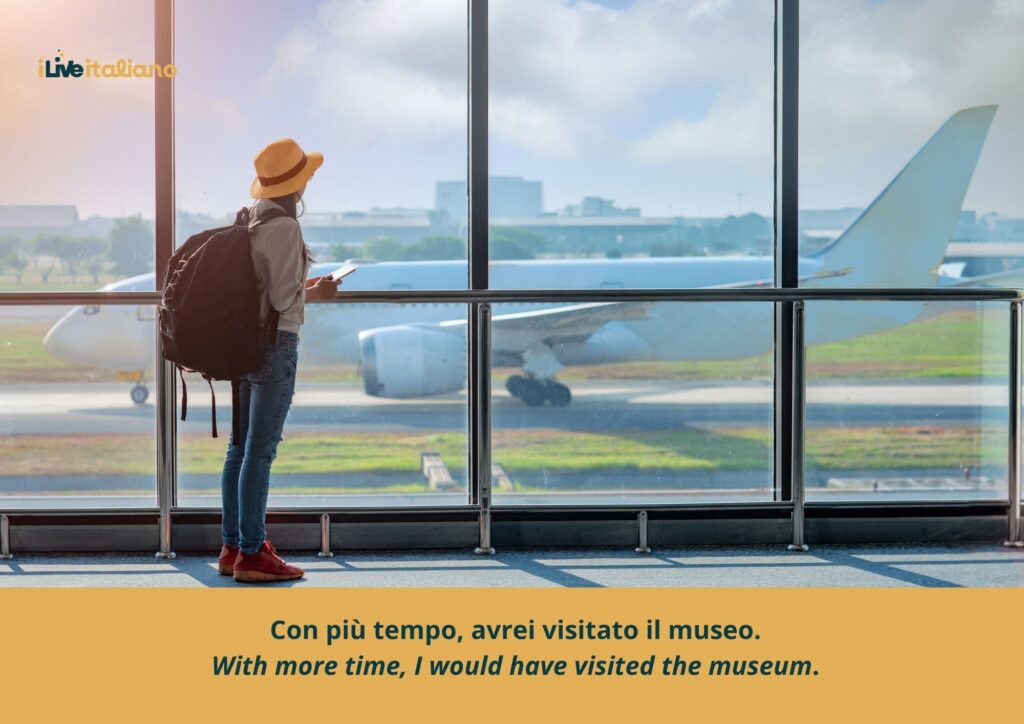
- Con più tempo, avrei visitato il museo. = With more time, I would have visited the museum.
Missed intentions/regrets
- Avrei voluto chiamarti, ma non ho potuto. = I would have liked to call you, but I couldn’t.
If-clauses about the past
- Se avessi saputo, non sarei venuto. = If I had known, I wouldn’t have come.
Reported past (unconfirmed)
- La squadra sarebbe stata venduta. = The team is said to have been sold.
The Italian conditional tense: FAQ
Your quick guide to Italy’s most courteous mood. Here you’ll find clear answers to the questions learners ask most: how “would” maps to Italian, when to choose the conditional over the subjunctive, how to conjugate reflexive forms, and the key differences between condizionale and congiuntivo. Perfect for a fast refresher before you order that “vorrei un caffè.”
Is the Italian conditional the same as “would” in English?
Often, yes for the present conditional (mangerei = I would eat) and the past (avrei mangiato = I would have eaten). But Italian also uses the conditional for politeness and hedging where English might prefer could/might or just a softer tone.
When do Italians use the conditional instead of the subjunctive? qui metterei un collegamento all’articolo sul congiuntivo
In main clauses to express potentiality, courtesy, advice, and the result of an if-clause. The if-clause itself typically takes the subjunctive (Se avessi tempo, viaggerei). Conditional = outcome; subjunctive = condition. Read our guide to the Italian subjunctive to go deeper.
How do I form the conditional of reflexive verbs?
Use the reflexive pronoun + conditional of essere/verb: mi laverei, ti alzeresti, si vestirebbe, ci divertiremmo, vi addormentereste, si sposerebbero. For the past conditional: mi sarei alzato/a, ci saremmo divertiti/e, with agreement.
What is the difference between condizionale and congiuntivo?
Condizionale marks potential actions, politeness, hypothetical results, and future in the past. Congiuntivo marks uncertainty, subjectivity, desire, doubt, and is required after certain triggers (penso che, benché, prima che) inside subordinate clauses. In many hypotheticals they work as a pair: subjunctive in the if-clause, conditional in the result.
Tip to sound native
Swap direct forms for conditional buffers: Vorrei… Potrei… Mi piacerebbe… Sarebbe possibile… Direi che… These phrases instantly add Italian courtesy and nuance.