

The imperfetto is one of the most expressive verb tenses in Italian. It helps you describe the past with nuance: habits, ongoing actions, background scenes, emotions, and all those moments that weren’t “one‑and‑done.” Mastering it is essential for sounding natural and storytelling like an Italian.
What is the imperfetto in Italian?
The imperfetto is a past tense used to talk about actions that were ongoing, habitual, repeated, or that describe states, feelings, and background information in the past.
In English, it often corresponds to “was/were + -ing,” “used to,” or simple past, depending on context.
Examples:
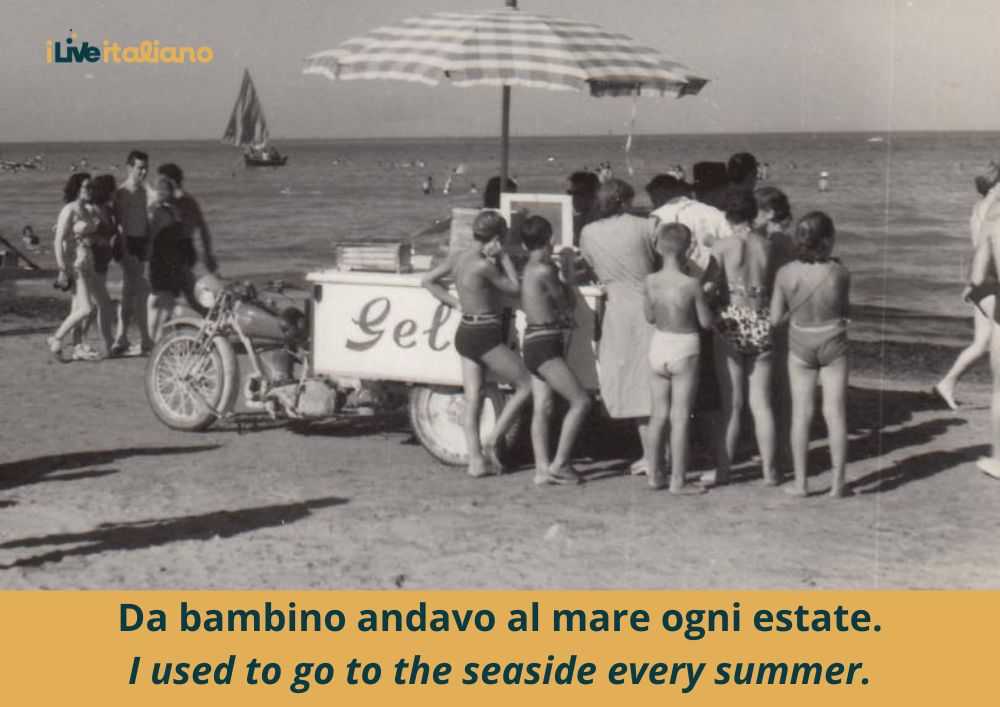
- Da bambino andavo al mare ogni estate. (I used to go to the seaside every summer.)
- Pioveva e faceva freddo. (It was raining and it was cold.)
How to form the Italian imperfetto?
To form the imperfetto, take the stem of the verb (the infinitive without -are/-ere/-ire) and add these endings:
- -are verbs: -avo, -avi, -ava, -avamo, -avate, -avano
- -ere verbs: -evo, -evi, -eva, -evamo, -evate, -evano
- -ire verbs: -ivo, -ivi, -iva, -ivamo, -ivate, -ivano
Examples:
- parlare → parlavo, parlavi, parlava…
- scrivere → scrivevo, scrivevi, scriveva…
- dormire → dormivo, dormivi, dormiva…
The only irregular verb is essere:
- ero, eri, era, eravamo, eravate, erano
How to use the imperfetto in Italian
You use the imperfetto for:
- Habitual actions
Ogni sera guardavo la TV. - Descriptions and background information
La città era silenziosa. - Ongoing past actions
Studiavo mentre lui cucinava. - Age, time, weather in the past
Avevo dieci anni.
Era mezzogiorno.
Faceva caldo. - Feelings and mental states
Ero felice.
Pensavo a te.
It paints the “background” of a story.
Imperfetto vs passato prossimo in Italian
These two tenses often coexist, but they serve different purposes.
- Imperfetto = ongoing, repeated, descriptive, incomplete
- Passato prossimo = single, completed, specific actions
Think of a movie:
- Imperfetto sets the scene.
- Passato prossimo moves the plot forward.
Example:
- Mentre leggevo (imperfetto), è suonato (passato prossimo) il telefono.
Imperfetto: what was happening
Passato prossimo: what interrupted or occurred suddenly
The imperfetto rarely works alone. To truly master Italian storytelling, you need to understand how it pairs with the passato prossimo, the tense that moves the action forward while the imperfetto sets the scene. Think of them as two sides of the same coin: one paints the background, the other drives the plot.
Italian imperfetto: the common mistakes
Using passato prossimo instead of imperfetto for habits
Wrong: Quando ero piccolo sono andato in spiaggia ogni giorno.
Right: Quando ero piccolo andavo in spiaggia ogni giorno.
Overusing imperfetto for completed actions
Wrong: Ieri andavo al cinema. (unless something interrupted it)
Right: Ieri sono andato al cinema.
Forgetting it for descriptions
La casa è stata grande e bella.
La casa era grande e bella.
Forgetting that “essere” is irregular
No: evo → ero
Mixing descriptions and single events
If it “happened once”, use passato prossimo.

Tips to avoid mistakes with Italian Imperfetto
- Think: Was this ongoing or completed?
- Look for time expressions:
- sempre, spesso, di solito → imperfetto
- ieri, una volta, all’improvviso → passato prossimo
- Practice with contrast sentences (mentre…)
Mastering the imperfetto isn’t about memorizing rules, it’s about changing how you see past actions. Once you start thinking in terms of background vs. action, the difference becomes much more natural.
Italian imperfetto – FAQ
The imperfetto is one of the key past tenses in Italian, but it often raises questions for learners because it doesn’t match perfectly with English structures. This FAQ will help you understand how it works and when to use it correctly.
How to use imperfetto in italian
To describe ongoing actions, habits, states, and background information in the past.
What is imperfetto in italian
A past tense used for non-completed, habitual, descriptive, or continuous situations.
When do you use imperfetto in italian
For scenes, emotions, repeated actions, childhood memories, and anything that forms the backdrop of a story.
When to use imperfetto vs passato prossimo
Use imperfetto for context and continuity; use passato prossimo for specific, completed events.