
The passato prossimo is one of the most important tenses in Italian for everyday conversation. If you want to chat about what happened yesterday, last weekend, or during your trip to Rome, this is the tense you’ll use constantly. It’s practical, versatile, and sounds natural once you get the hang of it.
Passato prossimo: when and why Italians use it in everyday speech
The passato prossimo is the go-to tense for talking about completed actions in the past, especially in spoken Italian. It’s like combining the English present perfect (“I have eaten”) and simple past (“I ate”) into one form. Italians use it all the time in daily life, from telling stories to describing recent events.
What is the passato prossimo? When to use it like a native
The passato prossimo expresses actions that happened at a specific time in the past and are now finished. Use it for:
- Recent or specific past events: Ieri ho mangiato una pizza fantastica. (Yesterday I ate a fantastic pizza.)
- Experiences up to now: Ho visitato Roma tre volte. (I’ve visited Rome three times.)
- Sequences of actions in storytelling: Sono arrivato a casa, ho cenato e poi ho guardato un film. (I arrived home, ate dinner, and then watched a movie.)
Unlike the imperfetto (which describes ongoing or habitual past states), the passato prossimo focuses on completed actions. Natives switch to it naturally for anything “done and dusted,” especially with time markers like ieri (yesterday), stamattina (this morning), la settimana scorsa (last week), or nel 2020 (in 2020).
Passato prossimo: how to construct sentences for your daily conversations
To form the passato prossimo, combine:
- The present tense of the auxiliary verb (avere or essere).
- The past participle of the main verb.
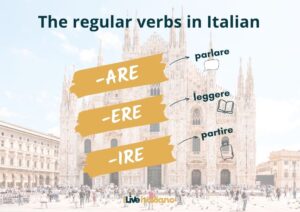
Regular past participles follow simple patterns:
- -are verbs → drop -are, add –ato: parlare → parlato (spoken)
- -ere verbs → drop -ere, add –uto: credere → creduto (believed)
- -ire verbs → drop -ire, add –ito: partire → partito (left)
Examples in sentences:
- Ho parlato con Maria. (I spoke with Maria. / I have spoken with Maria.)
- Abbiamo creduto alla storia. (We believed the story.)
- Sono partiti presto. (They left early.)
The participle usually stays the same with avere, but with essere, it agrees in gender and number with the subject (more on that below).
Avere or Essere? The simple trick for English speakers
Many English speakers struggle here, but there’s an easy way to think about it. Use avere for most verbs (like “have” in English present perfect: “I have eaten”). Use essere mainly for:
- Verbs of motion (andare, venire, arrivare, partire, entrare, uscire, salire, scendere, tornare, etc.)
- Verbs of change of state (nascere, morire, diventare, crescere)
- Reflexive verbs (lavarsi, vestirsi, alzarsi)
- A few others like essere (stato), sembrare, rimanere, costare
Trick for English speakers: If the verb involves “being somewhere” or “changing condition” (like going/coming or becoming/born/died), it’s usually essere. Otherwise, default to avere. Reflexives always take essere.
With essere, the past participle agrees: masculine singular (default), add -a for feminine singular, -i for masculine plural, -e for feminine plural.
- Lui è andato. / Lei è andata. / Loro sono andati / Loro sono andate.
With avere, no agreement unless there’s a direct object pronoun before the verb (e.g., Le ho viste – I saw them f.).
Passato prossimo practice: master the top 10 irregular past participles
Many common verbs have irregular past participles, you just have to memorize them. Here are 10 of the most frequent ones you’ll hear every day:
- Fare → fatto (done/made) – Ho fatto la spesa. (I did the shopping.)
- Dire → detto (said) – Hai detto la verità? (Did you tell the truth?)
- Scrivere → scritto (written) – Ho scritto un messaggio. (I wrote a message.)
- Leggere → letto (read) – Ho letto il libro. (I read the book.)
- Bere → bevuto (drunk) – Abbiamo bevuto del vino. (We drank some wine.)
- Chiedere → chiesto (asked) – Ho chiesto informazioni. (I asked for information.)
- Vedere → visto (seen) – Ho visto un bel film. (I saw a nice movie.)
- Mettere → messo (put) – Dove hai messo le chiavi? (Where did you put the keys?)
- Venire → venuto (come) – Sono venuto a piedi. (I came on foot.)
- Aprire → aperto (opened) – Ho aperto la finestra. (I opened the window.)
Practice by swapping them into sentences: start with regulars, then replace with these irregulars.
Passato prossimo practice: how to describe your day in Italy like a native
Try describing your typical day using passato prossimo. Here’s a model, then exercises:
Model: Stamattina mi sono svegliato alle 7, ho fatto colazione con un cappuccino e un cornetto, sono uscito di casa e sono andato al lavoro. Ho lavorato fino alle 18, poi sono tornato a casa e ho cenato con amici.
Exercises (fill in the blanks or rewrite):
- Ieri ______ (andare) al Colosseo e ______ (vedere) il Foro Romano.
- La settimana scorsa ______ (bere) troppo caffè e ______ (dormire is regular: dormito) male.
- ______ (fare) una passeggiata a Trastevere e ______ (incontrare) un vecchio amico.
- ______ (scrivere) una cartolina per la famiglia e ______ (mandare – regular: mandato) per posta.
- ______ (uscire) presto e ______ (arrivare) in ritardo lo stesso!
Write your own version about a recent day or trip—aim for 8–10 sentences mixing avere/essere and some irregulars.
Passato prossimo: common mistakes and how to fix them
English speakers often:
- Mix up avere/essere → Remember the motion/change/reflexive rule; practice with lists.
- Forget agreement with essere → Check gender/number: Lei è arrivata (not arrivato).
- Use regular participles for irregular verbs → Memorize the top 10; say fatto, not faciuto.
- Translate English literally → Passato prossimo covers both “I ate” and “I have eaten,” so don’t overthink the difference.
Fix by reading aloud, listening to natives (podcasts, YouTube), and correcting yourself daily.
Passato prossimo FAQ
What is the past perfect in Italian? The past perfect (trapassato prossimo) describes actions completed before another past action.
How to explain past perfect simple?
It’s formed with imperfetto of avere/essere + past participle (e.g., avevo mangiato / ero andato). It means “had done.”
What are 5 examples of past perfect?
Avevo già mangiato quando sei arrivato. (I had already eaten when you arrived.)
Era stanco perché aveva studiato tutta la notte. (He was tired because he had studied all night.)
Avevamo finito i compiti prima di uscire. (We had finished homework before going out.)
Lei era partita quando ho chiamato. (She had left when I called.)
Ero andato al mercato e avevo comprato frutta. (I had gone to the market and bought fruit.)
What are the key words for the past perfect?
Già (already), prima (before), quando (when – for sequence), dopo che (after), perché (because – explaining prior cause).
Is the passato prossimo the same as the English past simple?
Not exactly, it’s closer to a mix of present perfect and simple past. In spoken Italian, it often translates both “I did” and “I have done.”
Can I skip learning this and just use the present tense?
No. Italians rarely use present for past events (except in very informal storytelling). Skipping passato prossimo makes you sound unnatural or beginner-level. Master it for real conversations!