
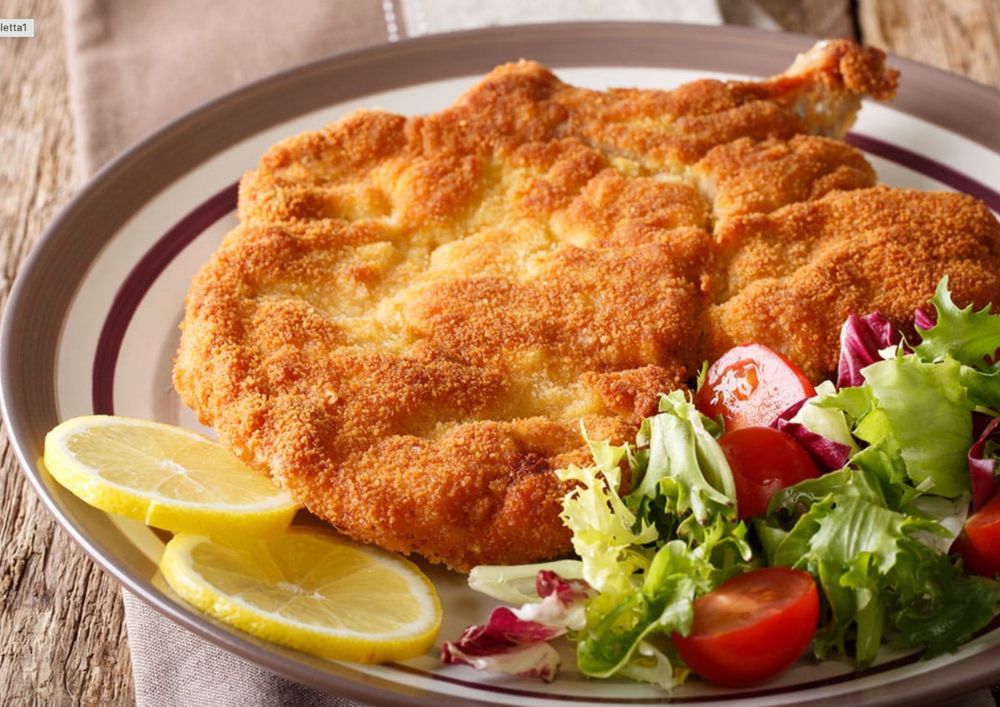
Few dishes express the soul of Milanese cuisine as clearly as cotoletta alla milanese. Crispy on the outside, tender and juicy on the inside, this beloved specialty is much more than a breaded cutlet: it is a symbol of Lombard culinary identity, deeply rooted in family traditions, Sunday lunches, and the elegant simplicity of northern Italian cooking.
At first glance, it may look like other breaded meat dishes found across Europe, but true cotoletta alla milanese has its own precise character, history, and ritual. Made with bone-in veal chop, coated in breadcrumbs and cooked in clarified butter, it is a dish that celebrates quality ingredients and careful technique rather than excess seasoning or embellishment.
In this article, we’ll explore the origins of cotoletta, the difference between the Milanese and Viennese versions, the authentic ingredients, the traditional recipe, the language surrounding the dish, the most common mistakes to avoid, and a practical FAQ for curious readers and home cooks.
The History of Cotoletta: Milan vs. Vienna and the “Lombolos cum Panitio”
The origins of cotoletta alla milanese have long been the subject of culinary debate, especially when compared to the Austrian Wiener Schnitzel. While the two dishes may appear similar, their history and preparation reveal important differences.
One of the earliest references often associated with the Milanese version is the medieval Latin expression “lombolos cum panitio”, which appeared in documents linked to Milanese ecclesiastical banquets. The phrase is generally interpreted as “loin chops with breading”, and many food historians consider it an early ancestor of modern cotoletta alla milanese. This suggests that breaded veal cutlets were known in Milan well before the Austrian schnitzel became internationally famous.
The Wiener Schnitzel, by contrast, is traditionally made with boneless veal, pounded very thin, breaded, and fried. Cotoletta alla milanese is characteristically thicker and usually served with the bone attached, giving it both more flavor and a more substantial texture. While schnitzel is often large, flat, and delicate, the Milanese cotoletta is richer, juicier, and more closely tied to the identity of the cut itself.
So, are they related? Very likely yes. Are they the same dish? Absolutely not. Cotoletta alla milanese should be understood not as an Italian version of schnitzel, but as a distinct and historically rooted dish in its own right.
Cotoletta alla milanese and traditional ingredients:
The beauty of cotoletta alla milanese lies in its simplicity. Because there are so few ingredients, authenticity depends entirely on using the right ones.
Ingredients for authentic cotoletta alla milanese
- 4 bone-in veal chops (preferably from the rib, thick-cut)
- 2 eggs
- Breadcrumbs, finely ground and plain
- Clarified butter (or high-quality butter prepared for frying)
- Salt
- Optional: a wedge of lemon for serving
Curious about the language behind the dish? If cotoletta alla milanese has sparked your interest in Italian culture, food, and lifestyle, there’s no better way to dive deeper than learning the language itself. Learn Italian with me and discover that Italian is not just a language, but a whole way of seeing the world.
What makes it truly Milanese?
To make an authentic Milanese cutlet, three elements are essential:
Veal, not pork or chicken
Traditional cotoletta is made with veal. Substituting pork or chicken may produce a tasty breaded cutlet, but it is no longer cotoletta alla milanese in the classic sense.
The bone-in chop
The most iconic version uses a veal chop with the bone attached, often called costoletta. This is one of the clearest distinctions between true Milanese cotoletta and many other breaded cutlets.
Clarified butter
Authentic cotoletta is fried in clarified butter, not olive oil. This gives the dish its characteristic rich aroma and beautifully golden crust.
No garlic, no herbs in the breading, no parmesan in the coating, and no heavy sauces: tradition here is all about restraint and balance.
Cotoletta alla milanese recipe
Making cotoletta alla milanese properly is not difficult, but it does require attention to detail. The secret is preserving the meat’s tenderness while achieving a crisp, even crust.
Ingredients (serves 4)
- 4 bone-in veal chops, about 2–3 cm thick
- 2 eggs
- 200 g plain breadcrumbs (approx.)
- Clarified butter, as needed for frying
- Salt, to taste
- Lemon wedges (optional)
Step-by-step recipe of Cotoletta alla milanese
- Prepare the veal chops
Take the veal chops out of the refrigerator about 20–30 minutes before cooking so they come closer to room temperature.
If necessary, trim excess connective tissue around the edges, but do not remove the bone. Lightly flatten the meat only if it is uneven, the chop should remain relatively thick, not paper-thin. - Beat the eggs
In a shallow bowl, beat the eggs until smooth. Do not over-season them; some traditionalists do not season the eggs at all. - Bread the meat
Dip each veal chop into the beaten egg, coating it evenly.
Then press it into the breadcrumbs, making sure the entire surface is covered. Press the breadcrumbs gently but firmly so they adhere well. For a more substantial crust, you can repeat the process once more, but traditionally the breading should remain elegant and not too heavy. - Heat the clarified butter
In a large frying pan, melt a generous amount of clarified butter over medium heat. The cutlets should fry comfortably without sticking or drying out. The butter should be hot, but not smoking. - Fry the cutlets
Cook each cotoletta for about 4–6 minutes per side, depending on thickness.
Turn it only once, and avoid pressing it down with a spatula, as this would release the juices and flatten the crust.
The result should be deep golden brown, crisp outside, and tender inside. - Drain and season
Transfer the cooked cutlets to a plate lined with paper towel or a wire rack for a moment, then season lightly with salt. - Serve immediately
Cotoletta alla milanese is best enjoyed hot and freshly fried, ideally served with a simple side dish and, if desired, a squeeze of lemon.
Cotoletta alla Milanese: the language of traditional milanese dining
Like many iconic Italian dishes, cotoletta alla milanese comes with its own vocabulary. Understanding a few key terms helps readers appreciate both the recipe and the culture behind it.
Cotoletta vs. Costoletta
These two words are often used interchangeably, but there is a subtle difference.
- Costoletta refers more specifically to the cut of meat, meaning a bone-in chop.
- Cotoletta refers to the finished dish, once the meat has been breaded and cooked.
In practice, many people in Milan use both terms naturally, but technically costoletta emphasizes the chop itself, while cotoletta refers to the prepared specialty.
Clarified butter
Clarified butter is butter that has had its water and milk solids removed, leaving only the pure butterfat.
Why is it important? Because it:
- has a higher cooking temperature
- reduces the risk of burning
- gives the cutlet a cleaner, richer flavor
- helps create the characteristic golden crust
It is one of the defining ingredients of authentic cotoletta alla milanese.
Side dish
A traditional side dish should complement the richness of the cutlet without overpowering it.
Classic options include:
- Baked potatoes
- Roasted or sautéed vegetables
- Cherry tomato and insalata di rucola (arugula salad)
A fresh salad is especially appreciated because its acidity and bitterness help cleanse the palate between bites of the buttery, crispy meat.
Cotoletta alla Milanese: common mistakes to avoid for an authentic result
Even though the recipe is simple, a few common mistakes can dramatically change the final result. If you want an authentic cotoletta alla milanese, here’s what to avoid.
Using pork or chicken
This is probably the most frequent shortcut. Pork and chicken are common in many “Milanese-style” cutlets around the world, but the traditional version uses veal.
Choosing a boneless, overly thin cut
A very thin, boneless slice will bring the dish much closer to schnitzel than to cotoletta alla milanese. The authentic version should have body, thickness, and ideally the bone.
Frying in olive oil
Olive oil may be excellent in many Italian recipes, but not here. For a truly traditional flavor and texture, clarified butter is the correct choice.
Over-seasoning the breadcrumbs
Adding garlic powder, parsley, parmesan, paprika, or other seasonings can overwhelm the dish. Traditional cotoletta is intentionally minimalist.
Pressing the meat too thin
Flattening the chop too aggressively removes the very quality that makes cotoletta alla milanese special: a juicy, tender interior.
Cooking at the wrong temperature
If the butter is too cool, the breading becomes greasy. If it is too hot, the crust burns before the meat is properly cooked. Medium, steady heat is essential.
Letting it sit too long before serving
Cotoletta should be served immediately. Waiting too long softens the crust and dulls the contrast between crisp exterior and tender center.
Cotoletta alla milanese: Chef Max Mariola’s take on a classic
If you want to see the magic happen in real time, watch Chef Max Mariola bring his signature take on cotoletta alla milanese to life. In this video, the beloved Italian chef shares his own version of the recipe, generous, confident, and full of personality, just like the dish itself. A perfect complement to everything you’ve read so far, and a great reminder that while tradition sets the rules, a little flair in the kitchen never hurts.
Cotoletta alla milanese – FAQ
Cotoletta alla milanese is one of the most famous dishes of Lombard cuisine, yet it is often misunderstood outside Italy. Here are some quick answers to the most common questions.
What does Milanese mean in cooking?
In cooking, “Milanese” generally refers to a preparation associated with Milan, often involving breaded and pan-fried meat.
What cut of meat is milanese?
Traditional cotoletta alla milanese is made with a bone-in veal chop, usually cut from the rib.
Can I use chicken or pork instead of veal?
You can, but it will no longer be authentic cotoletta alla milanese. Those are variations, not the traditional dish.
Should the meat be thin or thick?
It should be relatively thick, especially compared to schnitzel. The interior should remain juicy, not flat and dry.
Is veal Milanese the same as schnitzel?
No. While they are similar in concept, cotoletta alla milanese and Wiener Schnitzel differ in history, cut, thickness, and identity.