Few building types capture the social history of Milan as vividly as the case di ringhiera. Often translated loosely as “tenement houses,” these distinctive residential buildings are known for their long shared balconies, inward-facing courtyards, and close-knit atmosphere. They are modest in origin, but they have become one of the most recognizable symbols of old Milan.
For visitors, they offer a glimpse into the city’s everyday past beyond grand cathedrals and elegant boulevards. For locals, they remain tied to ideas of community, memory, and neighborhood identity. Understanding the case di ringhiera means understanding a quieter, more intimate side of Milanese culture.
What is a tenement house? Definition and origins
A tenement house is a multi-family residential building designed to accommodate several households within a compact urban structure, usually with shared access spaces and relatively modest private apartments. In Milan, the term casa di ringhiera refers to a specific local version of this idea: a building arranged around a courtyard, with apartments accessed from exterior balconies protected by iron railings.
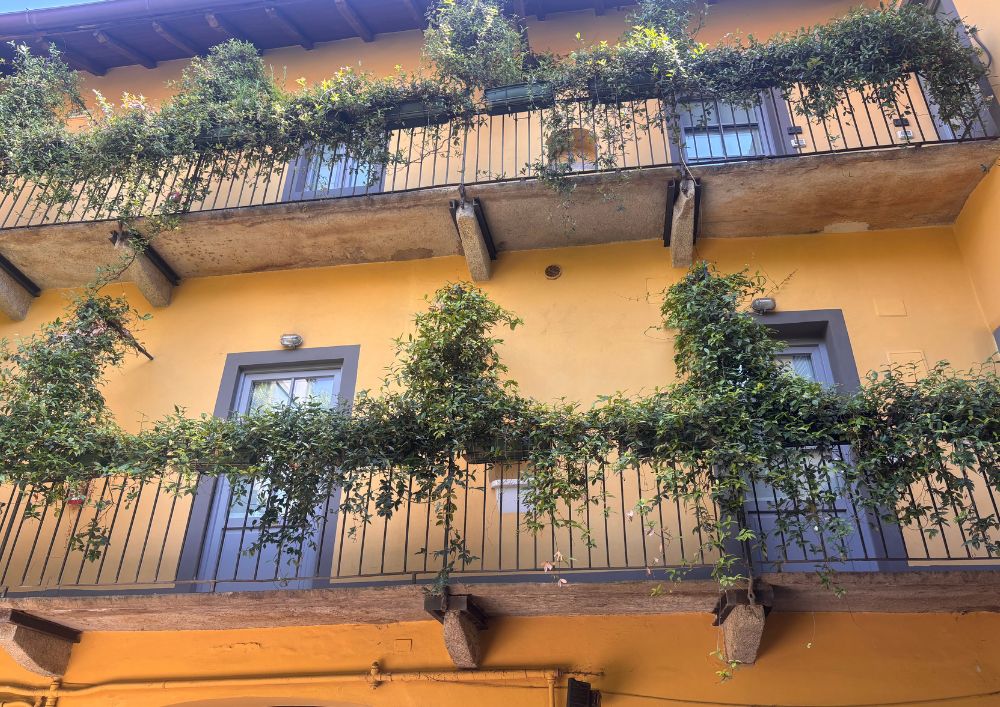
The name comes from the word ringhiera, meaning “railing.” These railings run along the balconies that connect the entrances of different homes on each floor. This design was practical and economical, making it possible to house growing numbers of workers and lower-middle-class residents during periods of rapid urban expansion. Over time, the casa di ringhiera became both an architectural form and a social world of its own.
A brief history of tenement housing in Milan
Milan’s case di ringhiera developed mainly between the 19th and early 20th centuries, when industrialization transformed the city. As factories, workshops, and rail infrastructure expanded, Milan attracted large numbers of workers from the surrounding countryside and from other parts of Italy. The city needed affordable urban housing, and the casa di ringhiera answered that need.
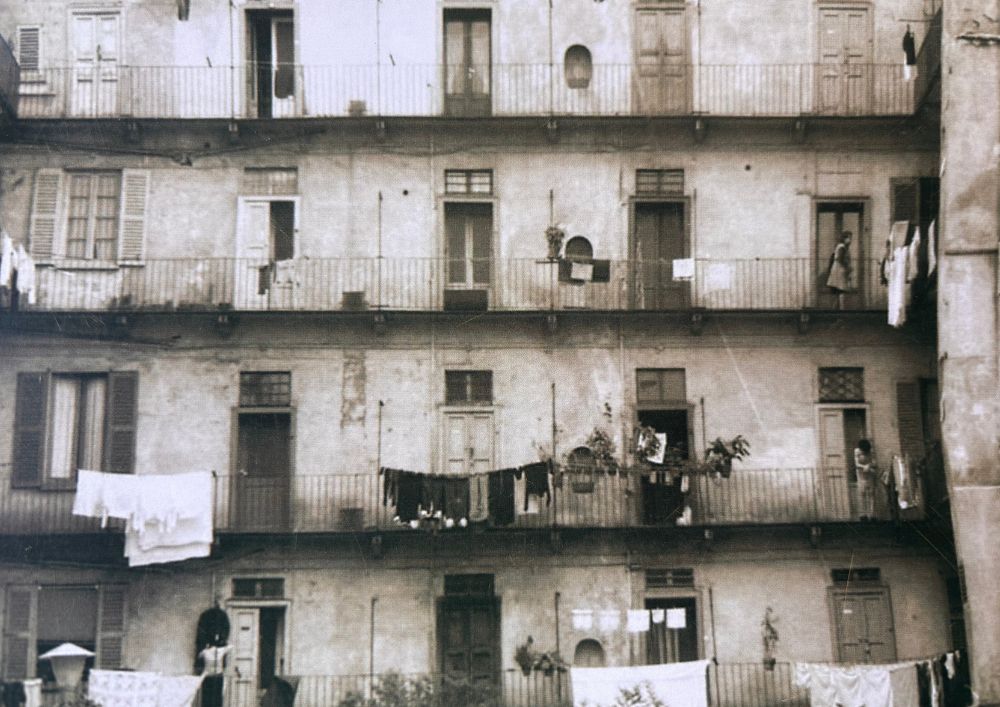
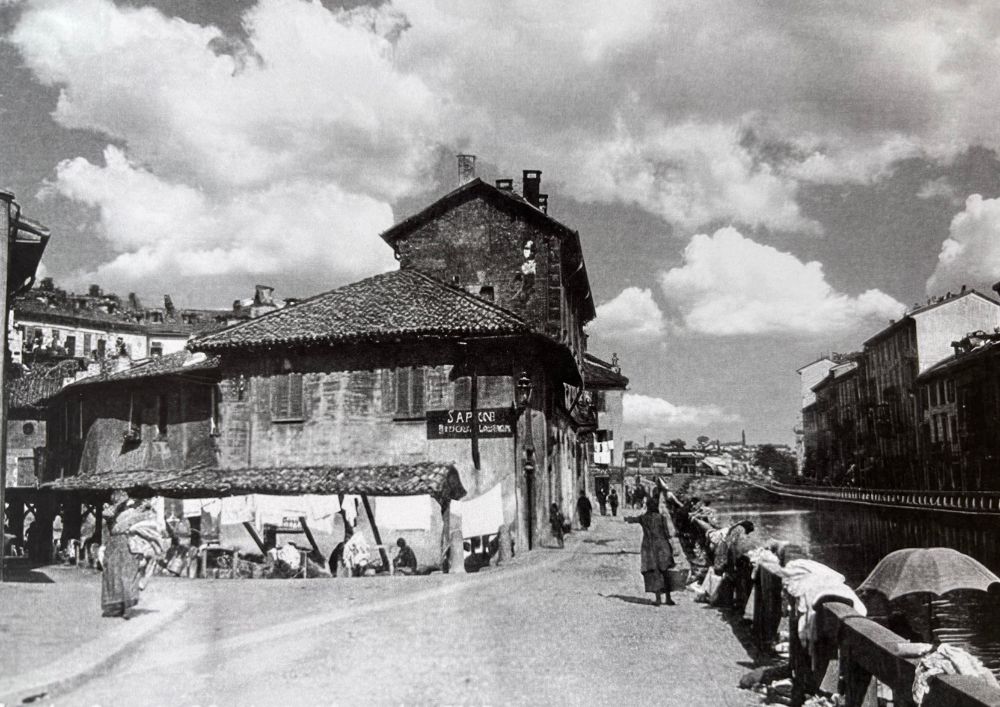
These buildings were typically simple, functional, and dense. They were often built in working-class districts near industrial areas, canals, railway lines, or artisan neighborhoods. Life in them was not luxurious: apartments were small, and until the 20th century many facilities were shared, including toilets and wash areas. Yet they also fostered strong neighborly ties, because daily life unfolded in common spaces as much as inside the home.
As Milan modernized, many of these buildings were demolished or heavily altered. Others survived and gradually changed status. In some neighborhoods, what was once workers’ housing became architecturally cherished and culturally iconic. Today, case di ringhiera can evoke both hardship and nostalgia, depending on whose history is being told.
Inside a tenement house: layout, balconies and shared spaces
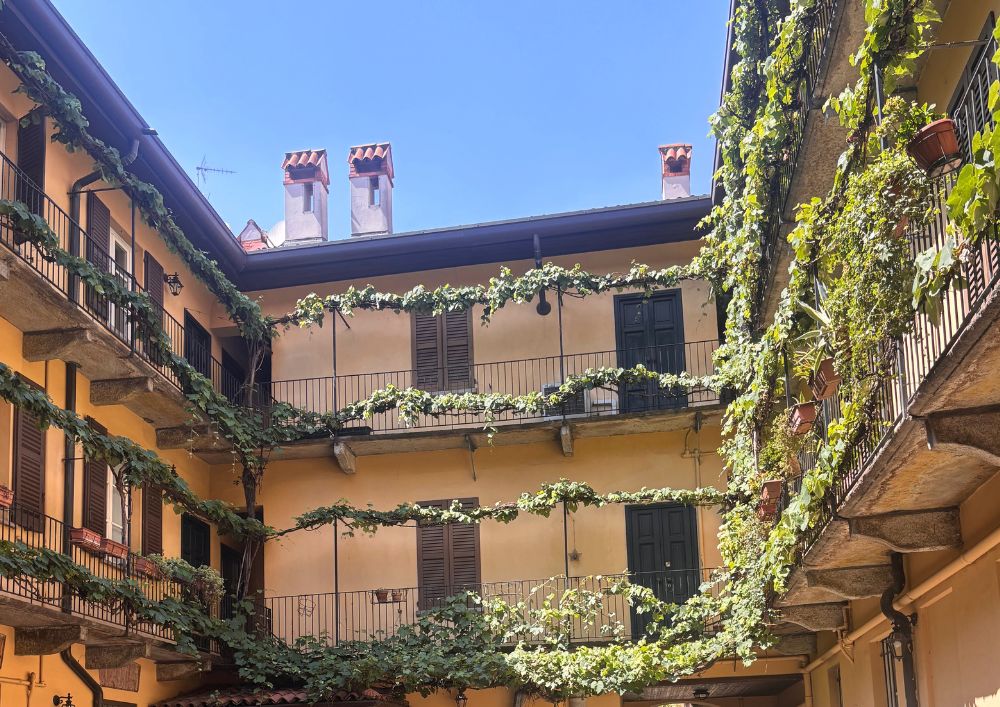
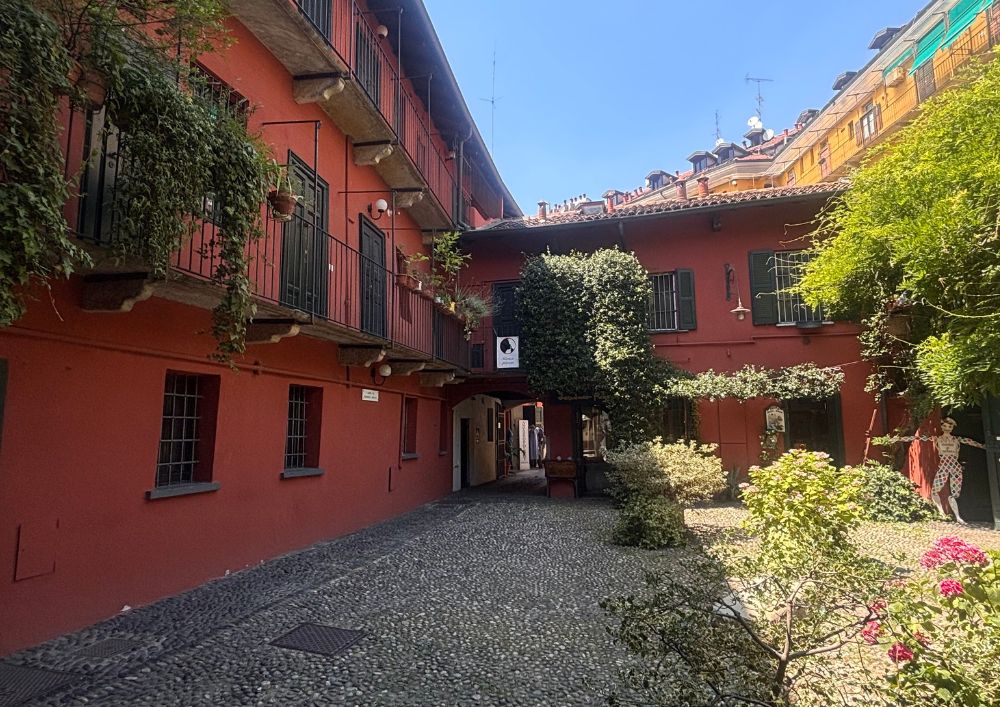
The classic casa di ringhiera is organized around an internal courtyard. From this courtyard, one can usually see the balconies that run along each floor ( i ballatoi), with doors opening directly into individual apartments. Rather than enclosed stairwells and private landings, circulation happens in semi-open communal passageways.
The most distinctive feature is the balcony itself. More than just an access route, it historically functioned as an extension of domestic life: people greeted neighbors there, hung laundry, exchanged news, watched children in the courtyard, and sometimes placed plants or small chairs outside their doors. This made the balcony a social threshold between private and public life.
Shared spaces were essential to the building’s identity. The courtyard often served as a common meeting place, while staircases, balconies, and service areas created a highly visible, interconnected environment. That closeness could mean noise and lack of privacy, but it also encouraged solidarity, mutual help, and a sense of belonging that many residents still associate with old Milan.
Exploring these neighborhoods is also a great excuse to experience another side of everyday Milanese life: the local markets. Many of the districts where case di ringhiera survive, like Navigli and Porta Ticinese, are close to some of the city’s most authentic Milan markets, where you can wander among stalls just as generations of residents once did.
Where to find case di ringhiera in Milan today
Examples of case di ringhiera can still be found in several historic neighborhoods of Milan, especially in areas that preserve traces of the city’s working-class and popular urban fabric. Districts such as Navigli, Porta Ticinese, Isola, Niguarda, Paolo Sarpi and parts of Porta Romana are often associated with surviving examples, although many have been renovated over the years.
They are not always monumental or immediately obvious from the street. In many cases, the most characteristic features are hidden behind gateways and inner courtyards. Walking through older residential streets, visitors may notice modest facades that reveal a very different world once the entrance opens inward.
Some of the best-known examples are now in gentrified areas, where traditional architecture coexists with trendy cafes, design shops, and contemporary city life. This contrast is part of what makes the case di ringhiera so compelling today: they are not frozen museum pieces, but living fragments of Milan’s layered identity.
Why Milan’s case di ringhiera still matter
The case di ringhiera still matter because they represent a social history that is easy to overlook in a city often described through finance, fashion, and modern design. They tell a story of labor, migration, adaptation, and neighborhood life. In that sense, they are cultural documents as much as buildings.
They also matter architecturally. Their courtyard layout, modest scale, and semi-communal spaces offer an alternative to more anonymous forms of urban housing. At a time when many cities are rethinking community, density, and livability, these older buildings can feel surprisingly relevant.
Finally, they endure in Milanese memory and imagination. They appear in literature, cinema, local storytelling, and everyday nostalgia because they symbolize a more communal urban life. Even when restored and transformed, they continue to embody a distinct idea of Milan: industrious, social, resilient, and deeply rooted in place.
Tenement houses: FAQ
Milan’s case di ringhiera are simple in structure but rich in meaning. The questions below cover the main points visitors and readers usually want to know.
What is the difference between a tenement house and an apartment block?
A tenement house usually refers to a more modest multi-family building historically associated with affordable urban housing, while an apartment block is a broader term that can describe any building divided into apartments, regardless of class or layout. In Milan, a casa di ringhiera is a specific traditional type of tenement house with shared balconies and a courtyard-centered design.
Are tenement houses still built today?
Not in their classic Milanese form. Contemporary residential buildings may borrow some communal ideas, but the traditional casa di ringhiera belongs mainly to an earlier period of urban development.
Why are they called “case di ringhiera” in Italian?
They are called case di ringhiera because of the ringhiera, or iron railing, that runs along the shared exterior balconies giving access to the apartments.
Can tourists visit tenement houses in Milan?
Some can be glimpsed from public entrances or courtyards, but most are private residential buildings and should be treated respectfully. Visitors can admire them from the street or in publicly accessible courtyards, but they should avoid entering private spaces without permission.