
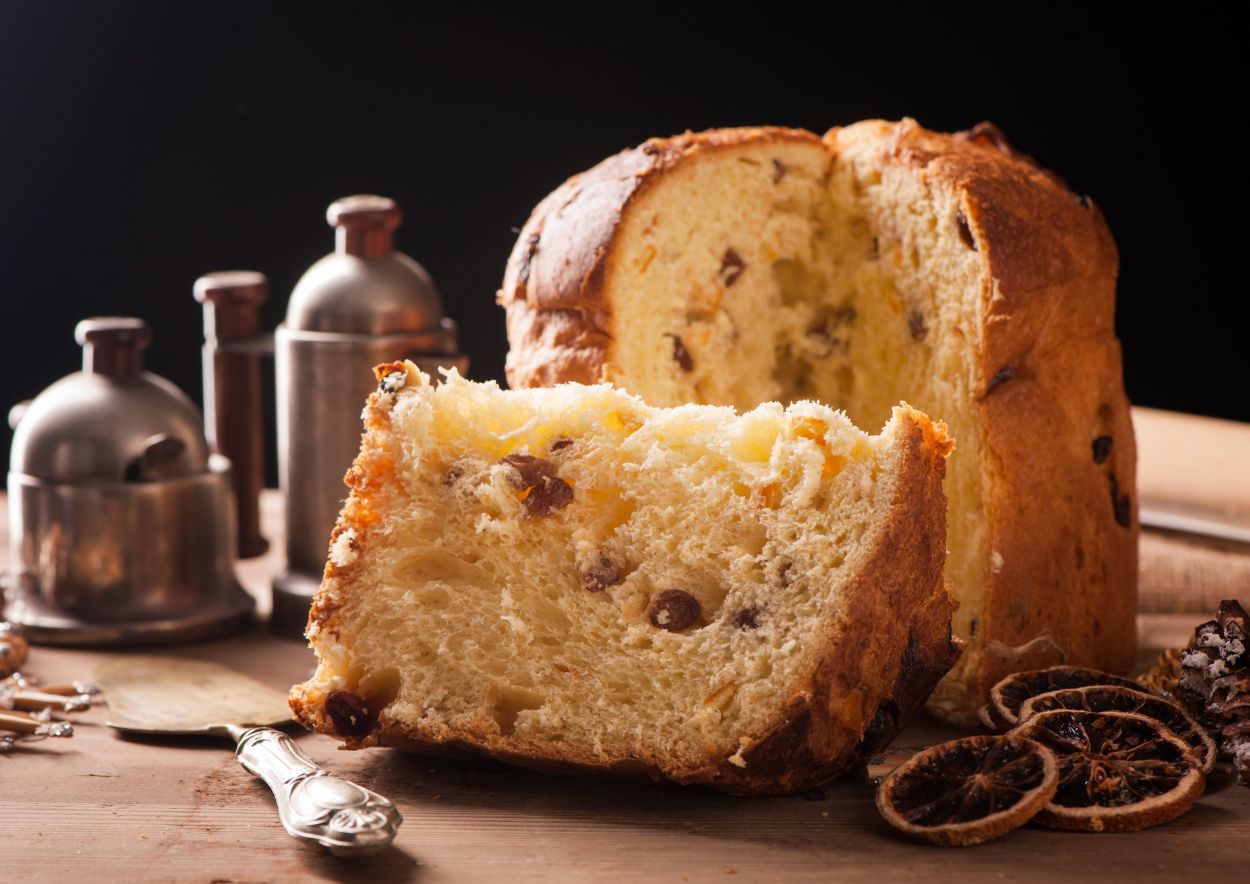
When it comes to Italian Christmas traditions, Panettone is king. This iconic, dome-shaped dessert, filled with candied fruits and raisins, has a name that’s just as sweet as its flavor.
A popular legend tells of a chef working for Ludovico Sforza, known as Ludovico il Moro, Duke of Milan in the late 15th century, who accidentally burned the dessert for a Christmas banquet. His young assistant, Toni, suggested serving a simple bread he had made that morning using pantry staples: flour, butter, eggs, citrus peel and raisins. When the Duke tasted it, he was thrilled and asked for the name of this delightful creation. The chef replied in Milanese, L’è ‘l pan del Toni, meaning “it’s Toni’s bread,” and from then on, it became known as “panettone.” Today, Panettone is much more than a holiday staple; it’s a symbol of Italian tradition, particularly in Milan, where it was born.
Panettone: bread or cake?
One of the most common debates surrounding Panettone is whether it’s a bread or a cake. It has the airy texture of a brioche, thanks to a lengthy leavening process that gives it a fluffy, bread-like consistency. For that reason, “panettone” would also mean “big bread”. However, Panettone’s richness, sweetness, and intricate flavor profile often categorize it as a cake. Ultimately, Panettone straddles both worlds, combining the best of bread and cake in one delightful holiday treat.

What is Italian Panettone?
In Italy, and especially in Milan, Panettone is more than just food, it’s a cherished part of holiday celebrations. Families gather around the table to enjoy slices of this festive treat during Christmas and New Year’s gatherings. In Milan, Panettone holds a particular place of pride, as locals see it as a piece of their culinary heritage. Artisanal bakeries across Italy work hard to perfect traditional and innovative recipes, and during the holiday season, shops are filled with beautifully wrapped Panettone, making it a perfect gift that symbolizes warmth and good cheer. If you are in Milan in early December, don’t miss the opportunity to enjoy a good slice of panettone at the Milan Market Oh bej Oh bej Fair.
Panettone pronunciation: how do we say it?
If you want to impress at your holiday dinner table, say it like this: Pah-net-tóh-neh. To pronounce “panettone” correctly, focus on vowel sounds and the double “t.” The “e” sounds like “eh,” not “ei,” and the “o” like the “o” in “story.” Start with “ah” for the “a” in “panettone.” Emphasize the double “t” to add the right stress.
Panettone original recipe
The original recipe of Panettone is simple yet refined, using high-quality flour, eggs, butter, sugar, and natural yeast. This recipe results in a tall, airy loaf that’s light and fragrant. The classic filling includes raisins and candied orange peels, which bring a subtle sweetness and a delightful, chewy texture. Traditional Panettone undergoes a meticulous process, often involving up to three days of rising and resting, which gives it its signature lightness and complex flavor.


How are you supposed to eat Panettone?
Panettone can be enjoyed in various ways, depending on your taste. It’s often served in simple, thick slices, either alone or with a light dusting of powdered sugar. Some Italians love to toast their Panettone slices and spread a bit of mascarpone on top for extra richness. Others pair it with a glass of sweet wine or coffee. At holiday gatherings, Panettone is frequently served alongside other desserts, allowing guests to enjoy its soft texture and nuanced flavor as a contrast to richer, heavier sweets.

Panettone chocolate
In recent years, chocolate Panettone has become increasingly popular, offering a rich twist on the traditional version. Made with high-quality cocoa and sometimes even chocolate chips, this version appeals to chocolate lovers while maintaining the classic texture of Panettone. Some variations even add chocolate cream, creating a decadent, melt-in-the-mouth experience that’s perfect for anyone looking to try a more indulgent version of this Italian classic.
Panettone pistachio
For those who love nuts, pistachio Panettone – panettone al pistacchio in Italian- is a unique and luxurious choice. Often filled with a creamy pistachio spread and sometimes topped with whole pistachios, this version combines the lightness of Panettone with the buttery flavor of pistachios. It’s a favorite for many Italians, particularly in regions where pistachios are a local delicacy, like Sicily.
Panettone ananas (my favorite)
Panettone with pineapple, or ananas in Italian, adds a tropical twist to this classic dessert. Pineapple chunks replace or complement the traditional raisins and candied fruits, giving the Panettone a unique, juicy sweetness. This version is especially popular among those looking for something refreshing and slightly less conventional, and it pairs wonderfully with fresh, fruity accompaniments or a glass of sparkling wine.
Panettone in Milan: a sweet discovery
Panettone has traveled far from its humble beginnings in Milan, yet it remains deeply rooted in the city’s holiday traditions. During the Christmas season, Milanese bakeries offer beautifully crafted Panettoni, each carefully wrapped and often tied with a ribbon, making it as much a gift as a treat. Sharing Panettone has become an enduring holiday ritual, one that brings family and friends together and showcases the artistry and love that Italians pour into their culinary creations.
So, whether you prefer classic Panettone or want to try versions with chocolate, pistachio, or even pineapple, there’s a type for everyone to enjoy. As Italians might say, “Buon Natale” and enjoy a slice of Panettone this holiday season!